


There are moments when I am reminded I am living in the ruins of a once-great civilization.
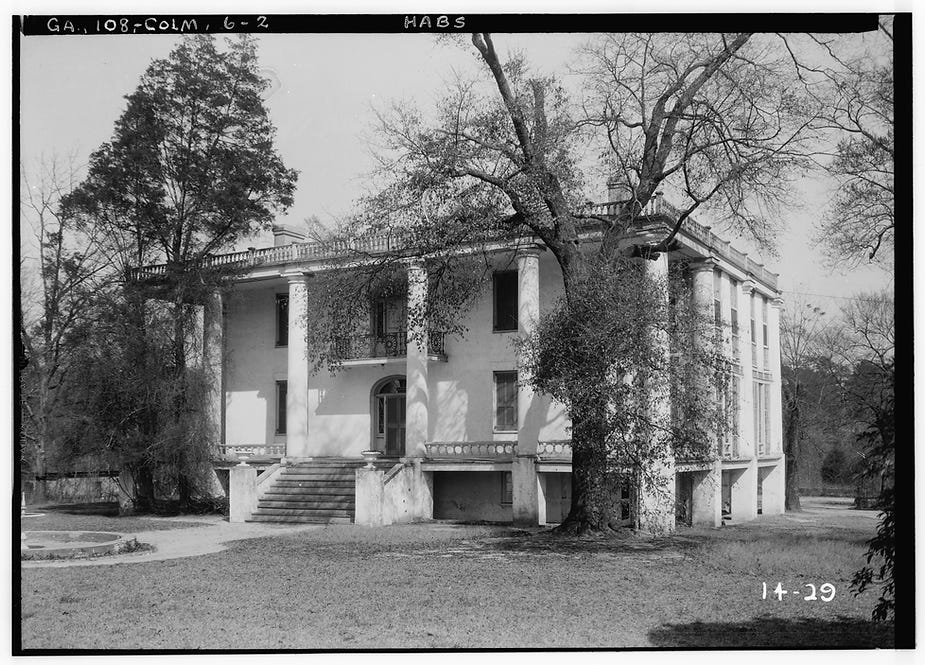
Not far from where I grew up, lost among the neighborhoods and golf courses that surround it, sits St. Elmo, a Greek Revival, white marble, towering columns, and an ornate fountain marking the entrance. It is a relic of what once was, a perfect representation of the architectural style that once dominated the South, standing now like a man in a frock coat at a strip mall, magnificent and utterly out of place.
Construction of St. Elmo began in 1828 and finished in 1833. Built by Colonel Seaborn Jones, the house was originally named El Dorado, and sat opposite a lake formed from the depression left where clay had been removed for the home’s construction — a fitting origin for a house that would itself become a kind of excavation site of Southern memory. Colonel Jones lived there for many years. His daughter went on to marry General Henry Benning, who made his name in the Civil War and for whom Fort Benning is named.
El Dorado housed many famous guests: President Millard Fillmore and President James K. Polk, as well as Henry Clay, General Winfield Scott, and Edwin Booth, brother of John Wilkes Booth.
Of all its guests, it is Colonel Jones’s niece, Augusta Jane Evans Wilson, who is the most interesting. Wilson finished her great novel within those walls, and the house would later be renamed St. Elmo in its honor… a curious reversal, the building consecrated by the book rather than the other way around.
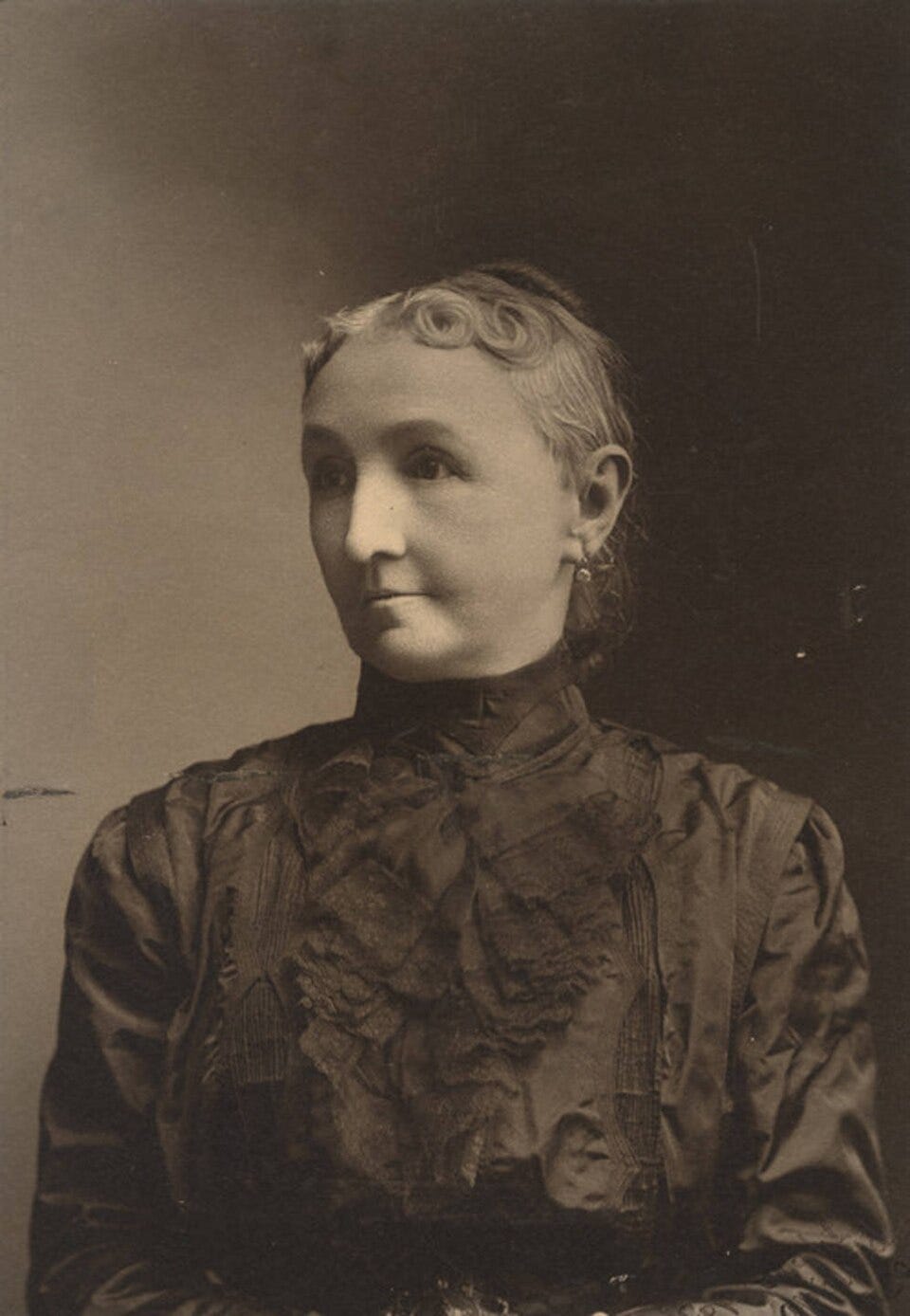
Wilson’s life was itself a remarkable story before she ever put pen to paper in that house. Born in Columbus in 1835, the oldest of eight children from a planter family, she watched her father’s business collapse in the Panic of 1837 and received almost no formal education as a result.
By the time she finished St. Elmo, she was already a seasoned writer; she had published her first novel at fifteen, nursed Confederate soldiers at Fort Morgan on Mobile Bay, visited the troops at Chickamauga, and written Macaria: Or, Altars of Sacrifice, a novel so effectively pro-Confederate that Union generals ordered their men not to read it and had copies burned.
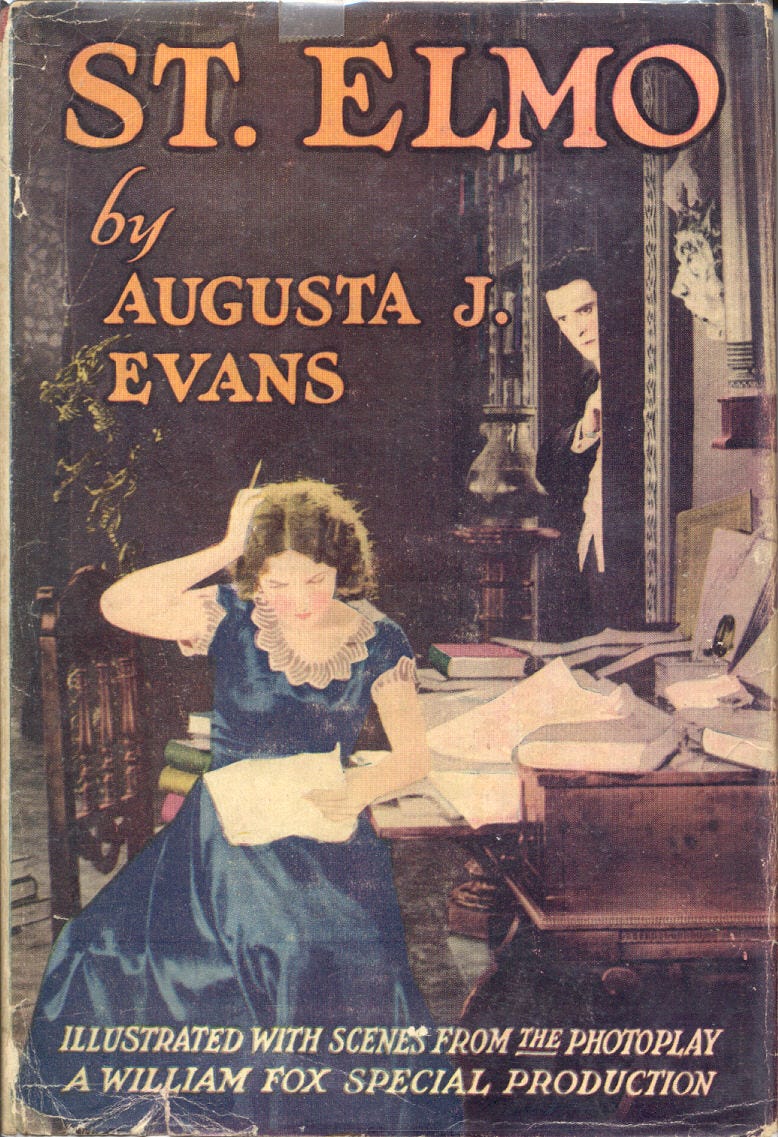
St. Elmo sold over a million copies in its first four months of publication; it was the third most popular novel of the entire nineteenth century, trailing only Uncle Tom’s Cabin and Ben-Hur. The book’s popularity was so total that it inspired the naming of villages, plantations, steamboats, railway carriages, male infants, a punch, and a cigar. It was adapted for the stage and screen multiple times. Wilson became the first woman in American history to earn $100,000 through her writing. And then, within a generation, it was gone, banned by the American Library Association in 1881, scrubbed from the canon, left to gather dust.
The reason given is its politics. Wilson was no feminist, and she made no effort to hide it. She referred to the women of the French Revolution as “perverted” and accused feminists of criminal conduct. Several passages were removed even before publication. Among them: twelve lines from the novel’s protagonist Edna’s speech, including the declaration that “utter ignorance is infinitely preferable to erudite unwomanliness.” Another forty-five lines were cut, among them: “I never hear the word ‘equality’ without a shudder.”
The opening lines of the novel leave no ambiguity about where Wilson stood:
“Ah! The true rule is — a true wife in her husband’s house is his servant; it is in his heart that she is queen. Whatever of the best he can conceive, it is her part to be; all that is dark in him she must purge into purity; all that is failing in him she must strengthen into truth; from her, through all the world’s clamor, he must win his praise; in her, through all the world’s warfare, he must find his peace.”
Yet her work was quietly preserved even as Wilson herself was erased: Eudora Welty named the heroine of her 1954 novel The Ponder Heart after Wilson’s protagonist Edna Earl. This itself is a beautiful literary debt paid to a writer whose name Welty’s readers would largely not have recognized.
It begs the question, “What have we forgotten that we lost?” To erase the third most popular novel of the nineteenth century, a book that at the time moved more Americans than almost anything else ever written, is intentional. It is a burial. Modern historians have become very good at burial. They do not argue with the past. Institutionally, they decide that certain things do not deserve to be remembered or discussed.
That is what strikes me most when I drive past St. Elmo. The house still stands, technically preserved, technically a landmark. But it is surrounded now, absorbed into the landscape of the ordinary, its lake long gone, its context erased. Like a peasant gazing upon an abandoned Roman bath, you could pass it a hundred times and never know what happened there, what was written there, what kind of world produced it.
The ruins are not always rubble. Sometimes they are still standing. Sometimes we live among them.
-TJS
Great work. I need to track a copy of this one down.
Thank you; so well written. Will check this out.